Tag Archives: early-years

The Encyclopedia on Early Childhood Development

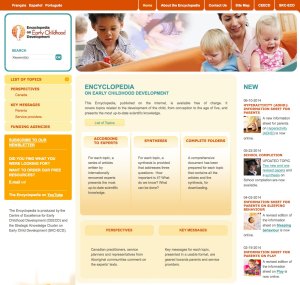
child-encyclopediaThis free online Encyclopedia was developed to provide readers from around the world with access to the best information available on the development of young children.

Since 2007 it has brought together articles written by internationally renowned experts on topics having to do with the development of young children, from conception to the age of five. Most of the topics addressed are explored from three perspectives: development, services and policy. In addition, for each topic there is a synthesis that provides, in a simplified format, the key points that will be most useful to practitioners and planners.

The majority of users are people who work with children, including educators, nurses, psychologists, and social workers, regular visitors who, in 80% of cases, use the information they find in their work; for example, as a reference they can share with parents. This is helpfully facilitated by the Encyclopedia being published in four languages: English, Français, Español and Português.

The Encyclopedia is produced by the Centre of Excellence for Early Childhood Development and the Strategic Knowledge Cluster on Early Childhood Development at the Université de Montréal in Canada. It may be reproduced for educational and non-profit purposes.

I first learned of this resource via Suzanne Schlechte’s pinterest board ‘Early Childhood Education‘; thanks Suzanne!


New Childhood MOOCs – two free online courses for Summer 2014

Two new MOOCs (massive open online courses) from the US and the UK are launching soon. Is one of them right for you?

Back in October 2013 I looked at the MOOCs Early Childhood Education by Gowrie Victoria on www.open2study.com, and Effective Classroom Interactions by the University of Virginia on www.coursera.org. This year there are two more options to choose from:

coursera-logo-nobg1. The Clinical Psychology of Children and Young People by the University of Edinburgh on Coursera.
This is a five week long course beginning on 28 July 2014. It requires between 1-3 hours of work per week, a total of 5-15 hours overall. The course is led by Professor Matthias Schwannauer, and offers a broad introduction to the core models of psychological development and the practice of the Clinical Psychology of Children and Young People. You don’t need to be working with children to study this course, and students who successfully complete it will receive a signed Statement of Accomplishment. The syllabus is:
Week 1: What is Development
Week 2: Attachment
Week 3: Risk and Resilience
Week 4: The Psychology of Adolescence
Week 5: Applied Developmental Psychopathology

EdX_Logo2. Positive Behavior Support for Young Children by The University of Washington on EdX.
This is a nine week long course beginning on 10 June 2014. It requires between 3-4 hours per week, a total of 30-35 hours overall. The course is led by Dr. Gail Joseph and will teach evidence-based models to promote social-emotional development for young children. The course is aimed at early childhood educators (also known as early years practitioners) already working with young children. As part of the course you will analyse the behavior one of your children in detail, working towards the outcome of learning classroom management skills that prevent challenging behavior. No certificates will be issued with this course.

Which course should you choose?
If you’ve not studied a MOOC before, Clinical Psychology of Children and Young People should be a good place to start, particularly if you’re interested in older children. It covers a wider age-range and is less skills-orientated, so you don’t need to be a current practitioner. In contrast, Positive Behavior Support for Young Children is a longer and more advanced course, so if you studied either of the MOOCs I reviewed last year, then this would be an ideal follow-on course. I’d summarise their relative positions like this:

Introductory level:

Early Childhood Education by Gowrie Victoria

Clinical Psychology of CYP by Edinburgh

Practitioner level:

Effective Classroom Interactions by Virginia

Positive Behavior Support by Washington

Interestingly, with edX, we now have a third platform in the mix. One analogy is with supermarkets; the four courses above are equivalent to products you might want, but which supermarket you choose to get it from can make quite a difference to your experience. So far I have preferred the Australian open2study platform over Coursera, as it’s more fun to use and the students achieve better results. However, I’m really looking forward to trying edX, not least because it is the only major platform that is nonprofit and open-source, which sits comfortably with my own attitude that education should be more of a human right than a commercial commodity.​

Free textbooks by The National Academies Press

The NAP in Washington publish more than 200 books a year on a wide range of topics, resulting in a catalogue of more than 4,000 titles in PDF format which can be downloaded for free by the chapter or the entire book. The NAP catalogue includes 98 books on Children, Youth and Families. Here are four books from the catalogue:
cover4.phpSnow C.E, and Van Hemel, S.B, (2008): Early Childhood Assessment: Why, What, and How
This book affirms that assessments can make crucial contributions to the improvement of children’s well-being, but only if they are well designed, implemented effectively, developed in the context of systematic planning, and are interpreted and used appropriately. Otherwise, assessment of children and programs can have negative consequences, especially children from economically disadvantaged homes and communities and children with special needs.
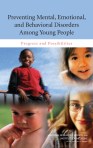
cover3.phpBoat, T and Warner, K.E, (2009): Preventing Mental, Emotional, and Behavioral Disorders Among Young People: Progress and Possibilities  
Mental health and substance use disorders among children, youth, and young adults are major threats to the health and well-being of younger populations which often carry-over into adulthood. This book argues that greater effort is needed to prevent mental, emotional, and behavioural problems in young people, and highlights research which shows that many prevention programs work.
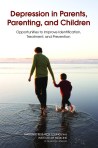
cover2.phpEngland, M.J, and Sim, L.J, (2009): Depression in Parents, Parenting, and Children: Opportunities to Improve Identification, Treatment, and Prevention
Health and social service professionals who care for adults with depression should not only tackle their clients’ physical and mental health, but also detect and prevent possible spillover effects on their children. In making this case, this book highlights disparities in the prevalence, identification, treatment, and prevention of parental depression among different socio-demographic populations. It also outlines strategies for effective intervention and identifies the need for a more interdisciplinary approach that takes biological, psychological, behavioural, interpersonal, and social contexts into consideration.
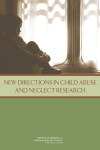
cover.phpPetersen, A, Joseph, J and Feit, M,(2013): New Directions in Child Abuse and Neglect Research 
This book from the Institute of Medicine reports that rates of physical and sexual abuse of children have declined over the last 20 years, but for reasons not fully understood. Yet, reports of psychological and emotional child abuse have risen in the same period, and data vary significantly as to whether child neglect is increasing, decreasing, or remaining constant.

These textbooks from The National Academies Press are of particular interest to students, academics and policy makers. The hard-cover versions cost in the region of $50-$60 each, so we are very fortunate to be able to download the PDF versions for free. I encourage academics and faculty to choose NAP and other free titles for their courses whenever possible, which saves students lots of money. 

Elsewhere on my blog, there is a separate page which lists other free textbooks of interest.