Free Early Years Outdoors & Play books

This pair of full-colour resource books for Early Years practitioners are feely available online from Northern Ireland Curriculum.

1. Learning Outdoors in the Early YearsOutdoor-Planning-Norther-Ireland
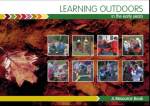
This 158-pages book was first published in 2005, before Forest Schools really took off. It is a useful resource for learning outdoors immediately outside your setting, rather than in a remote woodland. It is a 3MB download.

2. Learning Through Play in the Early Years 91395457
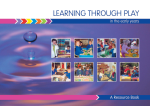
This 163-pages resource book was compiled by the Early Years Interboard panel in response to requests for guidelines on provision and progression in play. It is a 5.2MB download.

Both books are very attractive, with lots of charts and bullet-point lists. They are not textbooks; instead, with their full-colour photographs, they really stimulate your thinking – I became increasingly impatient to try out some of their ideas! I can imagine pages from these books working really well as slides projected onto a wall or screen during staff or volunteer training sessions – just select the pages that correspond with the topics you are covering.

For anyone interested in the academic provenance the above two books, Northern Ireland Curriculum also hosts a collection of research on the Early Years Enriched Curriculum by Queen’s University Belfast, including a very useful literature review of play-based pedagogy.


New free online course: Childbirth – A Global Perspective

pregnancy1This free course provides a broad overview of maternal and newborn health issues facing low-income and transitional countries, where more than 2.6 million babies are stillborn and nearly 500,000 women die during childbirth or from pregnancy-related complications each year.

Childbirth: A Global Perspective, is a new MOOC (massive open online course) by Emory University on the Coursera platform from 1 Oct – 19 Nov 2014. It requires 2-4 hours of study time per week for 6 weeks, a total of 12-24 hours overall. The course is free to study, and a Statement of Accomplishment is available.

The syllabus is:
Week 1: Introduction to Maternal Mortality and Morbidity in the Global Context
Week 2: Introduction to Maternal Mortality and Morbidity in the US Context
Week 3: The Impact of the Health Care Workforce Shortage on Maternal and Newborn Care
Week 4: Emergency Obstetric Care: Health Facility Services that Support Maternal Health and Survival
Week 5: Improving Maternal and Newborn Care through Community-Based Interventions
Week 6: Case Study in Ethiopia: Educating the Community and Training Front-Line Community Health Workers to Deliver Maternal and Newborn Care

MOOCs are free web-based courses designed for large numbers of participants. Anyone wanting to take a MOOC simply goes to the website and signs up. Typical MOOCs comprise video lectures, readings, quizzes and exchanges with instructors and fellow participants in online forums. Coursera is the biggest player in the global MOOC movement, and so far more than 7 million students from nearly 200 countries have registered to take nearly 600 Coursera classes from participating institutions.

index2If you are interested in pregnancy and childbirth, you may also like to take a look at the free Midwifery course by Australia’s University of Newcastle on another MOOC provider, open2study. The midwifery course covers the history of the profession and what it means to be a midwife today. It is delivered repeatedly throughout the year, requiring 2-4 hours of study time per week for 4 weeks, a total of 8-16 hours overall. Like the Childbirth course above, a Certificate of Achievement is available.

The Encyclopedia on Early Childhood Development

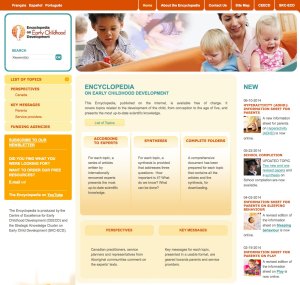
child-encyclopediaThis free online Encyclopedia was developed to provide readers from around the world with access to the best information available on the development of young children.

Since 2007 it has brought together articles written by internationally renowned experts on topics having to do with the development of young children, from conception to the age of five. Most of the topics addressed are explored from three perspectives: development, services and policy. In addition, for each topic there is a synthesis that provides, in a simplified format, the key points that will be most useful to practitioners and planners.

The majority of users are people who work with children, including educators, nurses, psychologists, and social workers, regular visitors who, in 80% of cases, use the information they find in their work; for example, as a reference they can share with parents. This is helpfully facilitated by the Encyclopedia being published in four languages: English, Français, Español and Português.

The Encyclopedia is produced by the Centre of Excellence for Early Childhood Development and the Strategic Knowledge Cluster on Early Childhood Development at the Université de Montréal in Canada. It may be reproduced for educational and non-profit purposes.

I first learned of this resource via Suzanne Schlechte’s pinterest board ‘Early Childhood Education‘; thanks Suzanne!