Tag Archives: children

Free textbooks by The National Academies Press

The NAP in Washington publish more than 200 books a year on a wide range of topics, resulting in a catalogue of more than 4,000 titles in PDF format which can be downloaded for free by the chapter or the entire book. The NAP catalogue includes 98 books on Children, Youth and Families. Here are four books from the catalogue:
cover4.phpSnow C.E, and Van Hemel, S.B, (2008): Early Childhood Assessment: Why, What, and How
This book affirms that assessments can make crucial contributions to the improvement of children’s well-being, but only if they are well designed, implemented effectively, developed in the context of systematic planning, and are interpreted and used appropriately. Otherwise, assessment of children and programs can have negative consequences, especially children from economically disadvantaged homes and communities and children with special needs.
cover3.phpBoat, T and Warner, K.E, (2009): Preventing Mental, Emotional, and Behavioral Disorders Among Young People: Progress and Possibilities  
Mental health and substance use disorders among children, youth, and young adults are major threats to the health and well-being of younger populations which often carry-over into adulthood. This book argues that greater effort is needed to prevent mental, emotional, and behavioural problems in young people, and highlights research which shows that many prevention programs work.
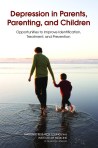
cover2.phpEngland, M.J, and Sim, L.J, (2009): Depression in Parents, Parenting, and Children: Opportunities to Improve Identification, Treatment, and Prevention
Health and social service professionals who care for adults with depression should not only tackle their clients’ physical and mental health, but also detect and prevent possible spillover effects on their children. In making this case, this book highlights disparities in the prevalence, identification, treatment, and prevention of parental depression among different socio-demographic populations. It also outlines strategies for effective intervention and identifies the need for a more interdisciplinary approach that takes biological, psychological, behavioural, interpersonal, and social contexts into consideration.
cover.phpPetersen, A, Joseph, J and Feit, M,(2013): New Directions in Child Abuse and Neglect Research 
This book from the Institute of Medicine reports that rates of physical and sexual abuse of children have declined over the last 20 years, but for reasons not fully understood. Yet, reports of psychological and emotional child abuse have risen in the same period, and data vary significantly as to whether child neglect is increasing, decreasing, or remaining constant.

These textbooks from The National Academies Press are of particular interest to students, academics and policy makers. The hard-cover versions cost in the region of $50-$60 each, so we are very fortunate to be able to download the PDF versions for free. I encourage academics and faculty to choose NAP and other free titles for their courses whenever possible, which saves students lots of money. 

Elsewhere on my blog, there is a separate page which lists other free textbooks of interest.

Open early childhood courses: How do they match up to MOOCs?

twitter_white_on_blue_logo_news_128pxThe University of Massachusetts, Boston, offers a suite of courses in early childhood as part of its free, online OpenCourseWare. These three 2011-dated courses each comprise a self study guide, audio PowerPoint presentations (with links to additional videos), online tests and a wide range of readings. They each take 15 hours to study, and the second and third courses are also offered in Spanish.

Infant and Toddler Guidelines
This course by Professor Mary Lu Love provides a comprehensive view of the development of infants and toddlers. It is arranged in six sessions:
1: Exploring the ELG for Infants and Toddlers
2: Social and Emotional Development
3: Cognitive Development
4: Language and Communication Development
5: Physical Health and Well-Being
6: Beyond the Basics: Best Practices and conclusion
The course is built upon the Massachusetts Early Learning Guidelines for Infants and Toddlers (2010), an excellent 200-page free download.

EEC logoEEC – Core Competencies
The second course by Professor Mary Lu Love is designed to provide early childhood education professionals with the knowledge and skills to assess their own level in terms of the eight core competencies, across the infant-toddler, preschool and out-of-school age range.
Each module is based on one of the eight core competencies:
1) understanding growth and development of children and youth
2) guiding and interacting with children and youth
3) partnering with families and communities
4) health, safety and nutrition
5) learning environments and curriculum
6) observation, assessment and documentation
7) program planning and development
8) professionalism and leadership

EEC – Preschool Learning Standards and Guidelines
The third course, by Professor Angi Stone-MacDonald, is designed to equip early childhood education professionals with the knowledge and skills to teach each content area according to the preschool learning guidelines. It comprises 7 modules covering the guidelines for:
1) Learning in History and Social Science
2) Mathematics
3) Learning in English Language Arts
4) Arts
5) Learning in Science and Technology/Engineering
6) Health Education
7) Early Childhood Program Standards Module

So how do these free courses compare with the MOOCs I reviewed last month? The shared characteristics of the UMass Boston courses include their being totally free to study, with no register or login required. You can download and keep the content, which gives you the freedom to begin whenever you want and study at your own pace, in contrast to the MOOCs that I reviewed last month, which both ran over a fixed 4-week schedule and required registration and log-in. Another difference is that while the MOOCs offer the motivation of large student cohorts (750 at Open2Study, 20,000 at Coursera), you study OpenCourseWare on your own, without any ready-made social dimensions – although they do lend themselves to group study amongst friends or work groups. Finally, UMass Boston’s OpenCourseWare is Creative Commons licensed, which makes them particularly attractive to educators and trainers who may, for example, freely adapt them for particular settings or translate them into different languages. cc-by-nc-sa

So, are these courses better than MOOCs? I think a lot depends upon your own situation. If you need structure and group support to study, then look at MOOCs first. If, however, you prefer to study alone and have sufficient self-discipline, or need maximum flexibility, then UMass Boston’s OpenCourseWare is an excellent option.

200 free childcare & youth podcasts

 Load up your mp3 player or phone with some of these podcasts for those long journeys. The top five podcasters below are easy to use; each allows you to download individual episodes or subscribe via iTunes, and most organise episodes within categories.

Social Work Podcast logo

(1) The monthly Social Work Podcast is hosted by  Jonathan Stringer. About 1-in-5 are about children & youth topics, and there is an archive of 87 episodes available, each between 30 mins – 1 hour long. Although the intended audience is social workers, these are equally useful to anyone in a helping profession, including psychology, nursing, psychiatry, counselling and education. With each podcast being accompanied by a transcript, references and citation, they are particularly valuable to students.
80x15

(2) Another monthly is the National CASA Podcast aimed at CASA’s volunteer advocates for abused and neglected children in the USA. There is an archive of 93 episodes dating back to 2008, each about 10-30 mins long.

insocialwork_banner2(3) The inSocialWork Podcast Series by University at Buffalo, New York broadcasts fortnightly, with each episode being between 20-40 mins long. There is an archive of 123 episodes in total, of which about 1-in-6  are about children & youth topics.  Many of these podcasts are accompanied by reviews, often by students.
80x15

(4) The Inclusion Matters’ series by the Center for Inclusive Child Care, Concordia University in Minnesota. These are broadcast approximately monthly, with an archive of 59 episodes. As these are typically only 10 mins long, they are particularly quick to download.

(5) Prevent Child Abuse, New Jersey. Sadly not updated since 2011, but their archive of 33 episodes is still available, each about 10-30 mins long.

Finally, you might wonder why UNICEF is not included above? UNICEF’s global radio service reports on the health, education, equality and protection of children around the world. 300 episodes have been broadcast since 2007, but currently they are only available via iTunes – an arrangement that excludes many potential listeners and consequently cannot be recommended.